Nutrient flows synthesis

Code
knitr::opts_chunk$set(warning=F, message=F, results=F, dev='svg')

library(tidyverse) #loads multiple packages (see https://tidyverse.tidyverse.org/)

#core tidyverse packages loaded:
# ggplot2, for data visualisation. https://ggplot2.tidyverse.org/
# dplyr, for data manipulation. https://dplyr.tidyverse.org/
# tidyr, for data tidying. https://tidyr.tidyverse.org/
# readr, for data import. https://readr.tidyverse.org/
# purrr, for functional programming. https://purrr.tidyverse.org/
# tibble, for tibbles, a modern re-imagining of data frames. https://tibble.tidyverse.org/
# stringr, for strings. https://stringr.tidyverse.org/
# forcats, for factors. https://forcats.tidyverse.org/
# lubridate, for date/times. https://lubridate.tidyverse.org/

#also loads the following packages (less frequently used):
# Working with specific types of vectors:
#     hms, for times. https://hms.tidyverse.org/
# Importing other types of data:
#     feather, for sharing with Python and other languages. https://github.com/wesm/feather
#     haven, for SPSS, SAS and Stata files. https://haven.tidyverse.org/
#     httr, for web apis. https://httr.r-lib.org/
#     jsonlite for JSON. https://arxiv.org/abs/1403.2805
#     readxl, for .xls and .xlsx files. https://readxl.tidyverse.org/
#     rvest, for web scraping. https://rvest.tidyverse.org/
#     xml2, for XML. https://xml2.r-lib.org/
# Modelling
#     modelr, for modelling within a pipeline. https://modelr.tidyverse.org/
#     broom, for turning models into tidy data. https://broom.tidymodels.org/

# Use the conflicted package (<http://conflicted.r-lib.org/>) to force all conflicts to become errors

#loading relevant packages
# library(tidyr)
# library(tidyverse) #mainly for reading files functions
# library(dplyr)
# library(ggplot2) #for ggplot graphs
library(cowplot) #for plot_grid()
# library(stringr) #to manipulate strings
# library(ggpattern) #to have patterns area with geom_area_pattern
# library(viridis)
# library(readxl) #to read excel file

#setting graphs theme
theme_set(
  theme_minimal() +
    theme(
      plot.title = element_text(face="bold")
      )
  )

#setting viridis theme for colors
scale_colour_continuous <- scale_colour_viridis_c
scale_colour_discrete   <- scale_colour_viridis_d
scale_colour_binned     <- scale_colour_viridis_b
#setting viridis theme for fill
scale_fill_continuous <- scale_fill_viridis_c
scale_fill_discrete   <- scale_fill_viridis_d
scale_fill_binned     <- scale_fill_viridis_b

Source <- "Sources: Water Agencies\nComputation Thomas Starck"


#WOULD BE BETTER IF SIAAP WERE THE SAME COLOR AS SEINE-NORMANDIE BASIN

# Load the function file
source("functions.R")

Load basins files

We create a file combining the different basins flows and ratios, for metropolitan France and for each basin. Since the Seine-Normandie basin data is only available for 2015, we also load the SIAAP data, containing 5 of the largest WWTP of Seine-Normandie, over a longer time period.

Code
path_source <- "output_data/basins/"
#artois-picardie
file_basin_artois_picardie <- read_csv(paste0(path_source, "basin_01_artois_picardie.csv")) %>% 
  mutate(basin="Artois-Picardie")
#rhin-meuse
file_basin_rhin_meuse <- read_csv(paste0(path_source, "basin_02_rhin_meuse.csv")) %>% 
  mutate(basin="Rhin-Meuse")
#SIAAP
file_basin_SIAAP <- read_csv(paste0(path_source, "basin_03_SIAAP.csv")) %>%
  mutate(basin="SIAAP")
#Seine-Normandie
file_basin_seine_normandie <- read_csv(paste0(path_source, "basin_03_seine_normandie.csv")) %>%
  mutate(basin="Seine-Normandie")
#Loire-Bretagne
file_basin_loire_bretagne <- read_csv(paste0(path_source, "basin_04_loire_bretagne.csv")) %>% 
  mutate(basin="Loire-Bretagne")
#Adour-Garonne
file_basin_adour_garonne <- read_csv(paste0(path_source, "basin_05_adour_garonne.csv")) %>% 
  mutate(basin="Adour-Garonne")
#Rhone-Mediterranée
file_basin_rhone_mediterranee <- read_csv(paste0(path_source, "basin_06_rhone_mediterranee.csv")) %>% 
  mutate(basin="Rhône-Méditerranée")

file_basin <- 
  bind_rows(
    file_basin_artois_picardie,
    file_basin_rhin_meuse,
    file_basin_seine_normandie,
    file_basin_loire_bretagne,
    file_basin_adour_garonne,
    file_basin_rhone_mediterranee
  )
rm(
  file_basin_artois_picardie, 
  file_basin_rhin_meuse, 
  file_basin_seine_normandie, 
  file_basin_loire_bretagne, 
  file_basin_adour_garonne, 
  file_basin_rhone_mediterranee
  )

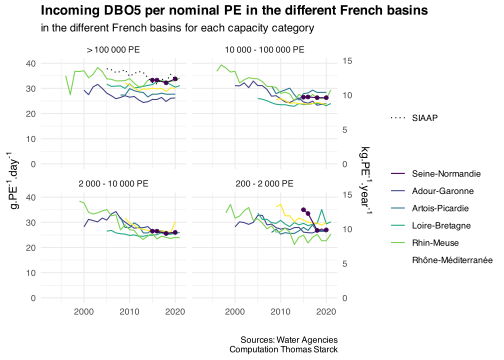
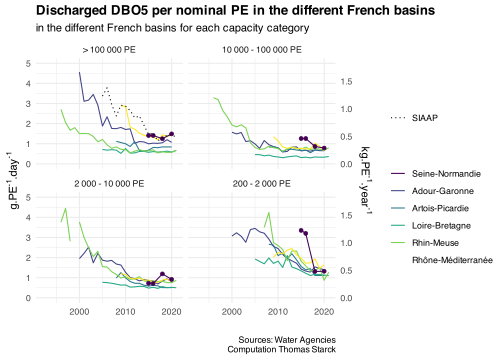
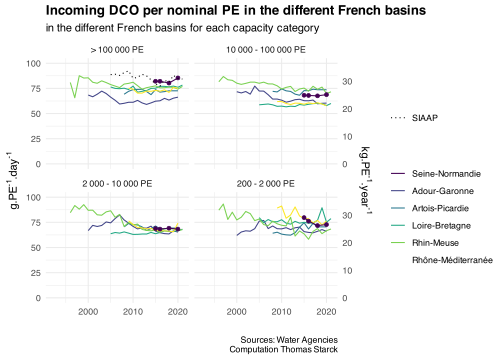
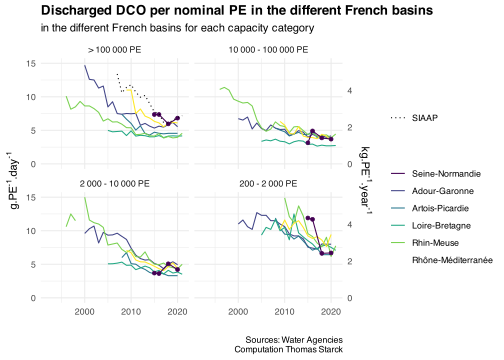
We load the same data as above but including nominal capacities categories (Basin x Capacity tabs below).

Code
path_source <- "output_data/basins_PE/"
#artois-picardie
file_basin_PE_artois_picardie <- read_csv(paste0(path_source, "basin_PE_01_artois_picardie.csv")) %>% 
  mutate(basin="Artois-Picardie")
#rhin-meuse
file_basin_PE_rhin_meuse <- read_csv(paste0(path_source, "basin_PE_02_rhin_meuse.csv")) %>% 
  mutate(basin="Rhin-Meuse")
#SIAAP
file_basin_PE_SIAAP <- read_csv(paste0(path_source, "basin_PE_03_SIAAP.csv")) %>%
  mutate(basin="SIAAP")
#Seine-Normandie
file_basin_PE_seine_normandie <- read_csv(paste0(path_source, "basin_PE_03_seine_normandie.csv")) %>%
  mutate(basin="Seine-Normandie")
#Loire-Bretagne
file_basin_PE_loire_bretagne <- read_csv(paste0(path_source, "basin_PE_04_loire_bretagne.csv")) %>% 
  mutate(basin="Loire-Bretagne")
#Adour-Garonne
file_basin_PE_adour_garonne <- read_csv(paste0(path_source, "basin_PE_05_adour_garonne.csv")) %>% 
  mutate(basin="Adour-Garonne")
#Rhone-Mediterranée
file_basin_PE_rhone_mediterranee <- read_csv(paste0(path_source, "basin_PE_06_rhone_mediterranee.csv")) %>% 
  mutate(basin="Rhône-Méditerranée")


file_basin_PE <- 
  bind_rows(
    file_basin_PE_artois_picardie,
    file_basin_PE_rhin_meuse,
    file_basin_PE_seine_normandie,
    file_basin_PE_loire_bretagne,
    file_basin_PE_adour_garonne,
    file_basin_PE_rhone_mediterranee
  ) 

file_basin_PE$PE_bin <- 
    factor(
      file_basin_PE$PE_bin, 
      levels = 
        c("unreported PE",
          "0 - 200 PE", 
          "200 - 2 000 PE", 
          "2 000 - 10 000 PE",
          "10 000 - 100 000 PE", 
          "> 100 000 PE"
          )
        )

rm(
  file_basin_PE_artois_picardie, 
  file_basin_PE_rhin_meuse, 
  file_basin_PE_seine_normandie, 
  file_basin_PE_loire_bretagne, 
  file_basin_PE_adour_garonne, 
  file_basin_PE_rhone_mediterranee
  )

Nutrient Ratios

Code
f_graph_ratio_basin <- function(dataset, ratio_in, ratio_out, ratio_label, y_min, y_max, legend_x, legend_y){
  g <- plot_grid(
    ggplot(dataset) +
      #basins
      geom_line(
        aes(Year, !!as.symbol(ratio_in), color=basin)
        ) +
      #SIAAP and it dotted line
      geom_line(
        data = file_basin_SIAAP, aes(Year, !!as.symbol(ratio_in), linetype="SIAAP")
        ) +
      scale_linetype_manual(values=c("dotted")) +
      #Seine-Normandie basin point for 20157
      geom_point(
        data = dataset %>% filter(basin=="Seine-Normandie"), 
        aes(Year, !!as.symbol(ratio_in), color = factor(basin))
        ) +
      ylim(y_min, y_max) +
      theme(legend.position = "none") +
      labs(
        x="", y="",
        title = paste(ratio_label, "in the different French basins"),
        subtitle = "Incoming flow",
        caption = "\n"
      ),
    ggplot(dataset) +
      #basins and the modified legend
      geom_line(
        aes(Year, !!as.symbol(ratio_out), color=basin)
        ) +
      guides(
        color = 
          guide_legend(
            override.aes = 
              list(
                linetype = c(1, 1, 1, 1, 1, 0),
                shape = c(NA, NA, NA, NA, NA, 19)
                )
            ) 
      ) +
      #SIAAP and its dotter line
      geom_line(
        data = file_basin_SIAAP, 
        aes(Year, !!as.symbol(ratio_out), linetype="SIAAP")
        ) +
      scale_linetype_manual(values=c("dotted")) +
      #Seine Normandie point in 2015
      geom_point(
        data = dataset %>% filter(basin=="Seine-Normandie"), 
        aes(Year, !!as.symbol(ratio_out), color = basin)
        ) +
      ylim(y_min, y_max) +
      theme(legend.position = c(legend_x, legend_y)) +
      labs(
        x="", y="",
        title = "",
        subtitle = "Discharged flow",
        caption = Source,
        color="",
        linetype = ""
      )
      )
  return(g)
}
Code
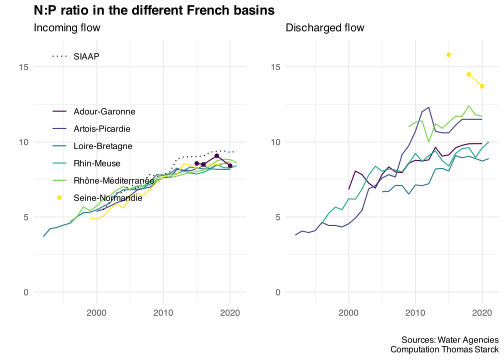
f_graph_ratio_basin(file_basin, "N_P_ratio_in", "N_P_ratio_out", "N:P ratio", 0, 16, -0.85, 0.7) 

Code
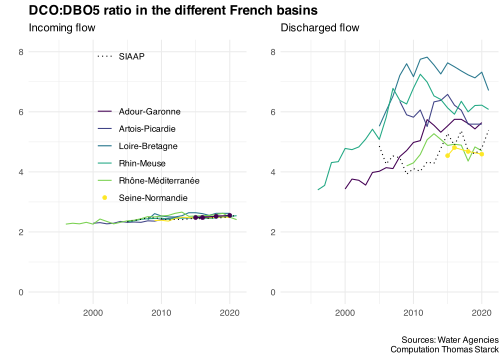
f_graph_ratio_basin(file_basin, "DCO_DBO5_ratio_in", "DCO_DBO5_ratio_out", "DCO:DBO5 ratio", 0, 8, -0.6, 0.7)

Code
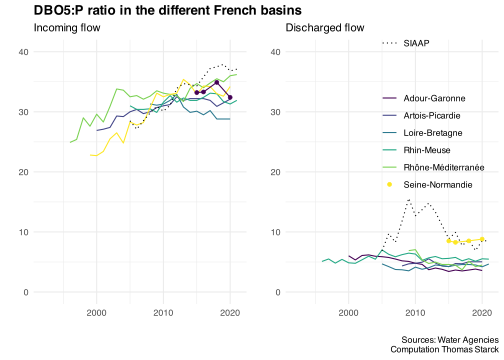
f_graph_ratio_basin(file_basin, "DBO5_P_ratio_in", "DBO5_P_ratio_out", "DBO5:P ratio", 0, 40, 0.7, 0.75)

Code
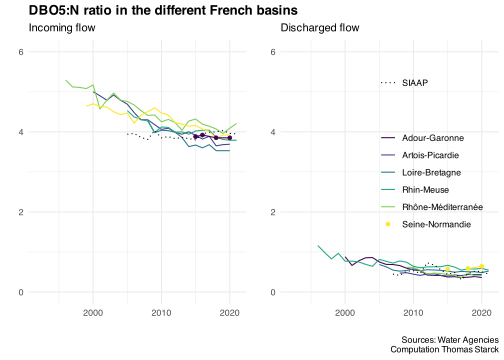
f_graph_ratio_basin(file_basin, "DBO5_N_ratio_in", "DBO5_N_ratio_out", "DBO5:N ratio", 0, 6, 0.7, 0.6)

Code
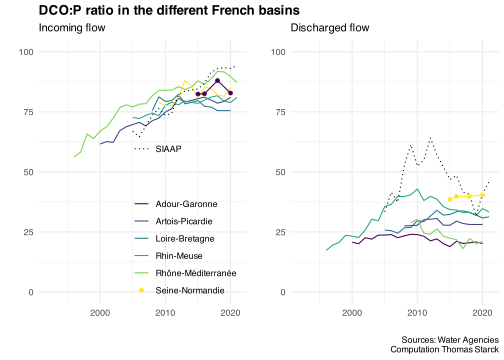
f_graph_ratio_basin(file_basin, "DCO_P_ratio_in", "DCO_P_ratio_out", "DCO:P ratio", 0, 100, -0.5, 0.35)

Code
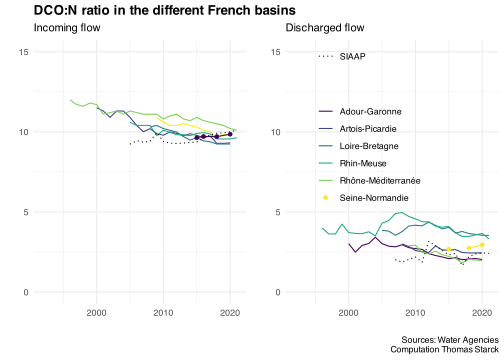
f_graph_ratio_basin(file_basin, "DCO_N_ratio_in", "DCO_N_ratio_out", "DCO:N ratio", 0, 15, 0.4, 0.7)

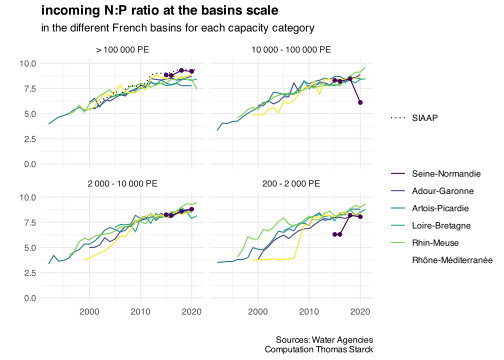
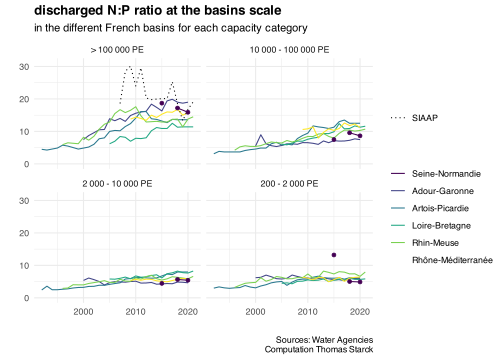
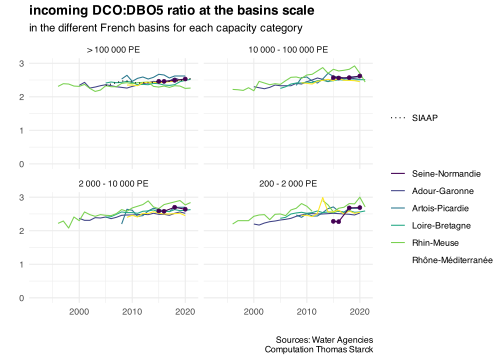
We do not analyse the very small WWTP (0 to 200 PE) which are very noisy and unreliable. Furthermore, they represent only a few percent of total flows.

Code
f_graph_ratio_basin_PE <- function(dataset, nutrient_ratio, ratio_label, y_min, y_max){
  g <- ggplot(dataset %>% filter(PE_bin !="unreported PE")) + 
    #basins and the modified legend
    geom_line(aes(Year, !!as.symbol(nutrient_ratio), color=basin)) +
      guides(
        color = 
          guide_legend(
            override.aes = 
              list(
                linetype = c(1, 1, 1, 1, 1, 0),
                shape = c(NA, NA, NA, NA, NA, 19)
                )
            ) 
      ) +
    #SIAAP and its dotted line
    geom_line(
      data = file_basin_PE_SIAAP, aes(Year, !!as.symbol(nutrient_ratio), linetype="SIAAP")
      ) +
    scale_linetype_manual(values=c("dotted")) +
    # Seine-Normandie 2015 point
    geom_point(
      data = dataset %>% filter(basin=="Seine-Normandie"), 
      aes(Year, !!as.symbol(nutrient_ratio), color = factor(basin))
      ) +
    labs(
      x="", y="", color="",
      title = paste(ratio_label, "ratio at the basins scale"),
      subtitle = "in the different French basins for each capacity category",
      caption = Source, 
      linetype = ""
    ) +
    facet_wrap(vars(PE_bin)) +
    ylim(y_min, y_max)
  return(g)
}
Code
f_graph_ratio_basin_PE(file_basin_PE %>% filter(PE_bin !="0 - 200 PE"), "N_P_ratio_in", "incoming N:P", 0, 10)

Code
f_graph_ratio_basin_PE(file_basin_PE %>% filter(PE_bin !="0 - 200 PE"), "N_P_ratio_out", "discharged N:P", 0, 31)

Code
f_graph_ratio_basin_PE(file_basin_PE %>% filter(PE_bin !="0 - 200 PE"), "DCO_DBO5_ratio_in", "incoming DCO:DBO5", 0, 3)

Code
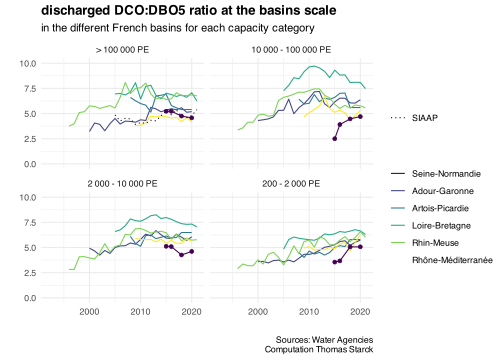
f_graph_ratio_basin_PE(file_basin_PE %>% filter(PE_bin !="0 - 200 PE"), "DCO_DBO5_ratio_out", "discharged DCO:DBO5", 0, 10)

Code
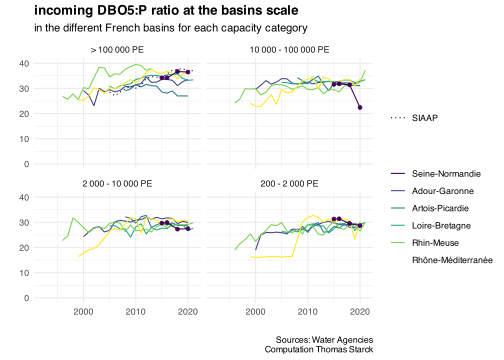
f_graph_ratio_basin_PE(file_basin_PE %>% filter(PE_bin !="0 - 200 PE"), "DBO5_P_ratio_in", "incoming DBO5:P", 0, 40)

Code
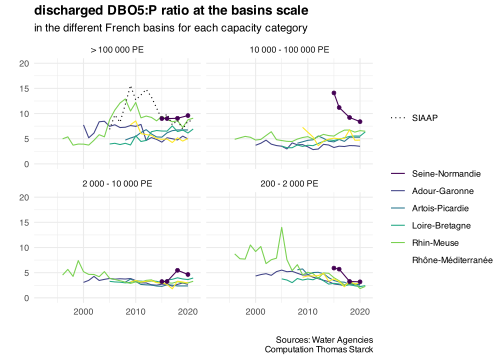
f_graph_ratio_basin_PE(file_basin_PE %>% filter(PE_bin !="0 - 200 PE"), "DBO5_P_ratio_out", "discharged DBO5:P", 0, 20)

Code
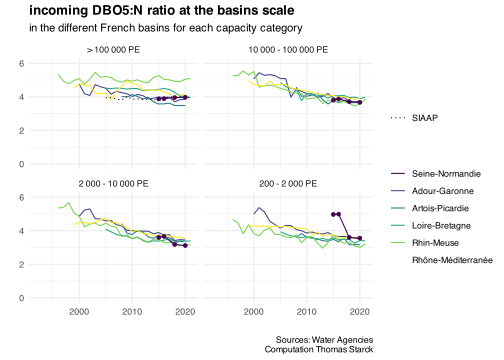
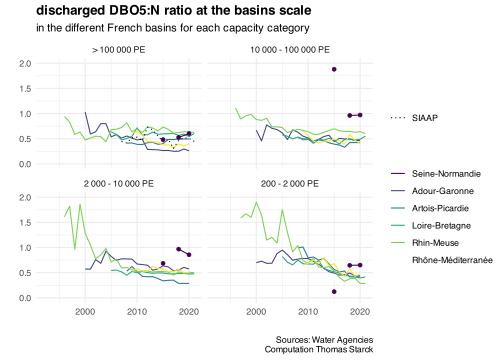
f_graph_ratio_basin_PE(file_basin_PE %>% filter(PE_bin !="0 - 200 PE"), "DBO5_N_ratio_in", "incoming DBO5:N", 0, 6)

Code
f_graph_ratio_basin_PE(file_basin_PE %>% filter(PE_bin !="0 - 200 PE"), "DBO5_N_ratio_out", "discharged DBO5:N", 0, 2)

Code
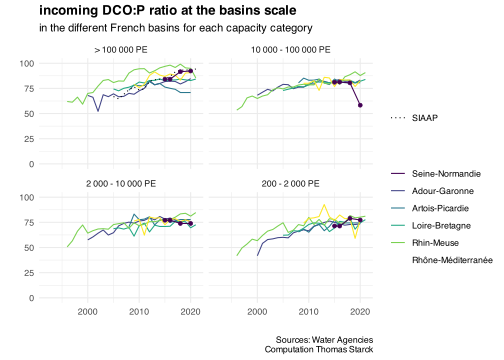
f_graph_ratio_basin_PE(file_basin_PE %>% filter(PE_bin !="0 - 200 PE"), "DCO_P_ratio_in", "incoming DCO:P", 0, 100)

Code
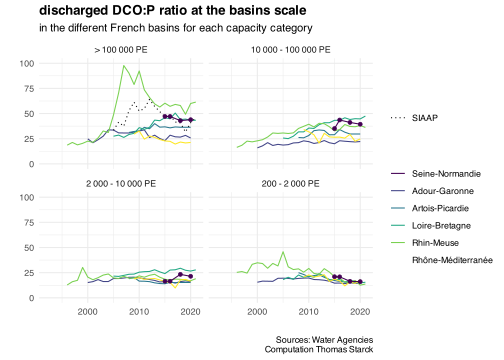
f_graph_ratio_basin_PE(file_basin_PE %>% filter(PE_bin !="0 - 200 PE"), "DCO_P_ratio_out", "discharged DCO:P", 0, 100)

Code
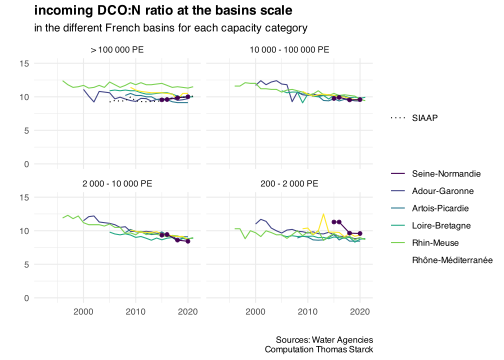
f_graph_ratio_basin_PE(file_basin_PE %>% filter(PE_bin !="0 - 200 PE"), "DCO_N_ratio_in", "incoming DCO:N", 0, 15)

Code
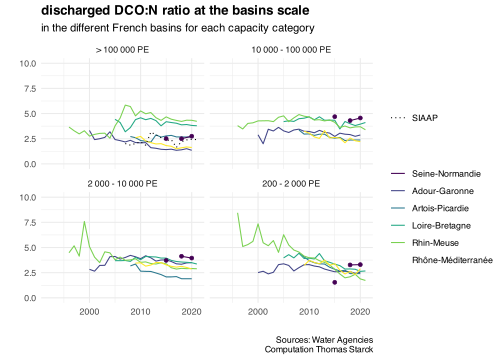
f_graph_ratio_basin_PE(file_basin_PE %>% filter(PE_bin !="0 - 200 PE"), "DCO_N_ratio_out", "discharged DCO:N", 0, 10)

Yield

Code
f_graph_yield_basin <- function(dataset, nutrient_yield, yield_label){
  g <- ggplot(dataset) +
    # basins and the adapted legend
    geom_line(aes(Year, !!as.symbol(nutrient_yield), color=basin)) +
    guides(
        color = 
          guide_legend(
            override.aes = 
              list(
                linetype = c(1, 1, 1, 1, 1, 0),
                shape = c(NA, NA, NA, NA, NA, 19)
                )
            ) 
      ) +
    #SIAAP and its dotter line
    geom_line(
      data = file_basin_SIAAP, aes(Year, !!as.symbol(nutrient_yield), linetype="SIAAP")
      ) +
    scale_linetype_manual(values=c("dotted")) +
    #Seine-Normandie 2015 point
    geom_point(
      data = dataset %>% filter(basin=="Seine-Normandie"), 
      aes(Year, !!as.symbol(nutrient_yield), color = basin)
      ) +
    ylim(0, 100) +
    labs(
      x="", y="yield (%)", color="",
      title = paste(yield_label, "wastewater treatment plant yield at the basins scale"),
      subtitle = "in the different French basins",
      linetype = ""
    )
  return(g)
}
Code
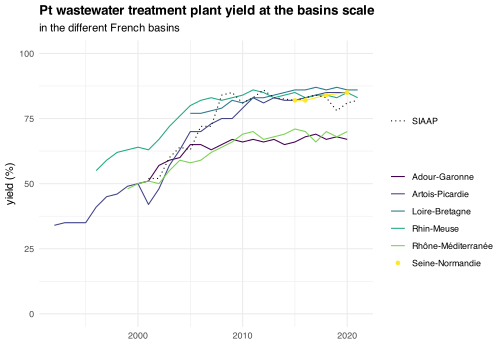
f_graph_yield_basin(file_basin, "Pt_yield", "Pt")

Code
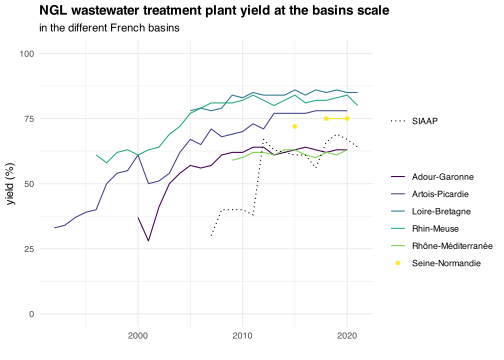
f_graph_yield_basin(file_basin, "NGL_yield", "NGL")

Code
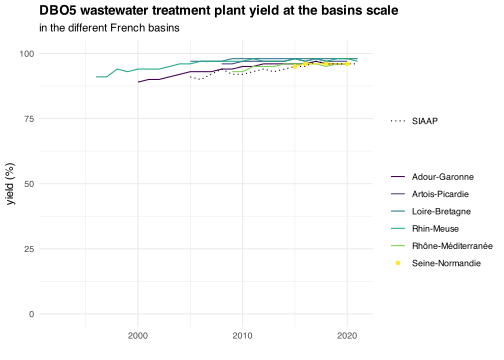
f_graph_yield_basin(file_basin, "DBO5_yield", "DBO5")

Code
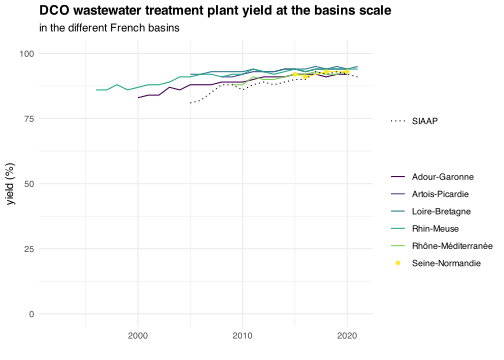
f_graph_yield_basin(file_basin, "DCO_yield", "DCO")

Code
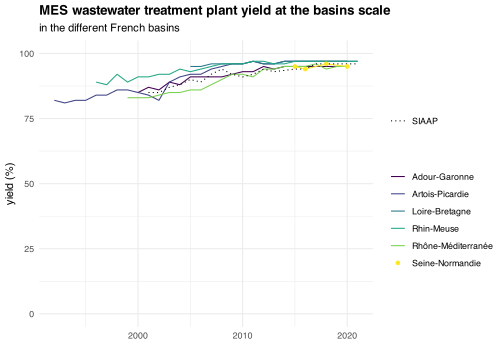
f_graph_yield_basin(file_basin, "MES_yield", "MES")

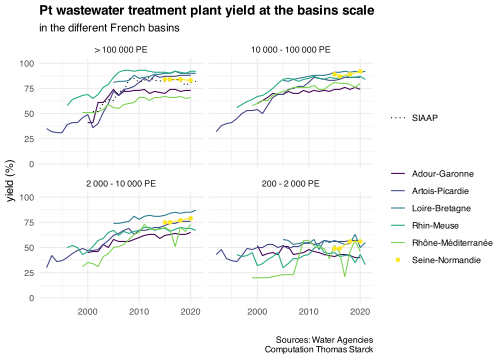
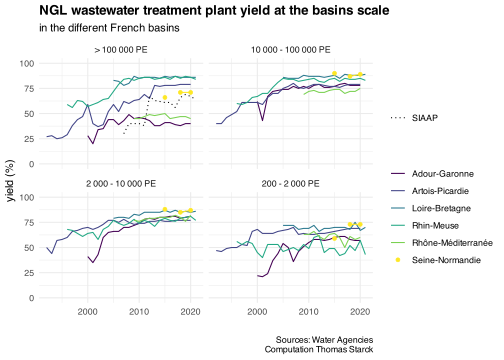
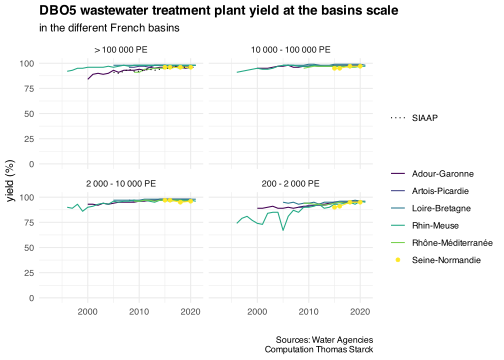
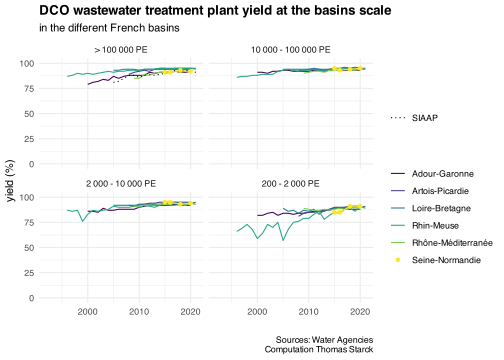
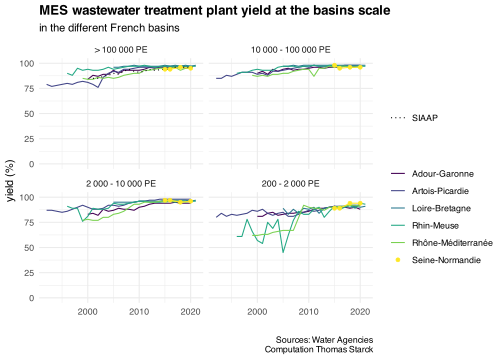
We do not analyse the very small WWTP (0 to 200 PE) which are very noisy and unreliable. Furthermore, they represent only a few percent of total flows.

Code
f_graph_yield_basin_PE <- function(dataset, nutrient_yield, yield_label){
  g <- ggplot(dataset %>% filter(PE_bin !="unreported PE")) + 
    #basins and adapted legend
    geom_line(aes(Year, !!as.symbol(nutrient_yield), color=basin)) +
    guides(
        color = 
          guide_legend(
            override.aes = 
              list(
                linetype = c(1, 1, 1, 1, 1, 0),
                shape = c(NA, NA, NA, NA, NA, 19)
                )
            ) 
      ) +
    #SIAAP and its dotter line
    geom_line(
      data = file_basin_PE_SIAAP, aes(Year, !!as.symbol(nutrient_yield), linetype="SIAAP")
      ) +
    scale_linetype_manual(values=c("dotted")) +
    #Seine-Normandie basin in 2015
    geom_point(
      data = dataset %>% filter(basin=="Seine-Normandie"), 
      aes(Year, !!as.symbol(nutrient_yield), color = basin)
    ) +
    ylim(0, 100) +
    labs(
      x="", y="yield (%)", color="",
      title = paste(yield_label, "wastewater treatment plant yield at the basins scale"),
      subtitle = "in the different French basins",
      caption = Source,
      linetype = ""
    ) +
    facet_wrap(vars(PE_bin)) 
  return(g)
}
Code
f_graph_yield_basin_PE(file_basin_PE %>% filter(PE_bin!="0 - 200 PE"), "Pt_yield", "Pt")

Code
f_graph_yield_basin_PE(file_basin_PE %>% filter(PE_bin!="0 - 200 PE"), "NGL_yield", "NGL")

Code
f_graph_yield_basin_PE(file_basin_PE %>% filter(PE_bin!="0 - 200 PE"), "DBO5_yield", "DBO5")

Code
f_graph_yield_basin_PE(file_basin_PE %>% filter(PE_bin!="0 - 200 PE"), "DCO_yield", "DCO")

Code
f_graph_yield_basin_PE(file_basin_PE %>% filter(PE_bin!="0 - 200 PE"), "MES_yield", "MES")

Flow / Capacity

Code
f_graph_capacity_basin <- function(dataset, ratio_in, ratio_out, ratio_label, y_min, y_max, legend_x, legend_y){
  g <- plot_grid(
    ggplot(dataset) +
      #basins 
      geom_line(aes(Year, !!as.symbol(ratio_in), color=basin)) +
      #SIAAP dotted line
      geom_line(
        data = file_basin_SIAAP, aes(Year, !!as.symbol(ratio_in), linetype="SIAAP")
        ) +
      scale_linetype_manual(values=c("dotted")) +
      #Seine-Normandie point in 2015
      geom_point(
        data = dataset %>% filter(basin=="Seine-Normandie"), 
        aes(Year, !!as.symbol(ratio_in), color = factor(basin))
        ) +
      theme(legend.position = "none") +
      labs(
        x="", y=expression(paste("g.PE"^"-1", ".day"^"-1")),
        title = paste(ratio_label, "per nominal PE in the different French basins"),
        subtitle = "Incoming flow",
        caption = "\n"
      ) +
      scale_y_continuous(
        limits = c(y_min, y_max),
        sec.axis = 
          sec_axis(
            trans=~.*(365/1000), 
            name=""
            )
          ),
    ggplot(dataset) +
      #basins and adapted legend
      geom_line(aes(Year, !!as.symbol(ratio_out), color=basin)) +
      guides(
        color = 
          guide_legend(
            override.aes = 
              list(
                linetype = c(1, 1, 1, 1, 1, 0),
                shape = c(NA, NA, NA, NA, NA, 19)
                )
            ) 
        ) +
      #SIAAP
      geom_line(
        data = file_basin_SIAAP, 
        aes(Year, !!as.symbol(ratio_out), linetype="SIAAP")
        ) +
      scale_linetype_manual(values=c("dotted")) +
      #Seine Normandie
      geom_point(
        data = dataset %>% filter(basin=="Seine-Normandie"), 
        aes(Year, !!as.symbol(ratio_out), color = basin)
        ) +
      theme(legend.position = c(legend_x, legend_y)) +
      labs(
        x="", y="",
        title = "",
        subtitle = "Discharged flow",
        caption = Source,
        color="",
        linetype = ""
      ) +
      scale_y_continuous(
        limits = c(y_min, y_max),
        sec.axis = 
          sec_axis(
            trans=~.*(365/1000), 
            name=expression(paste("kg.PE"^"-1", ".year"^"-1"))
            )
        )
      )
  return(g)
}
Code
f_graph_capacity_basin(file_basin, "Pt_PE_ratio_in", "Pt_PE_ratio_out", "Pt", 0, 2, 0.7, 0.7) 

Code
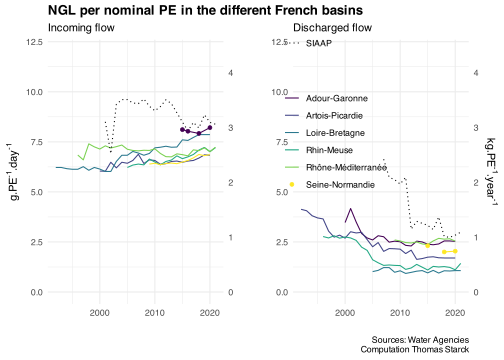
f_graph_capacity_basin(file_basin, "NGL_PE_ratio_in", "NGL_PE_ratio_out", "NGL", 0, 12, 0.25, 0.75)

Code
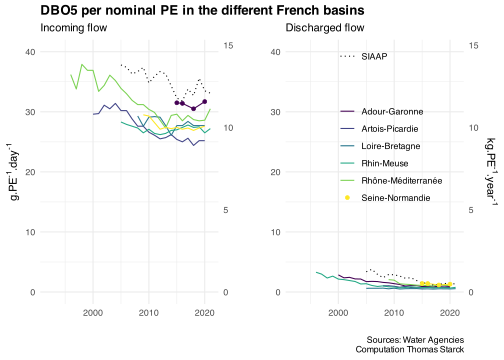
f_graph_capacity_basin(file_basin, "DBO5_PE_ratio_in", "DBO5_PE_ratio_out", "DBO5", 0, 40, 0.6, 0.7)

Code
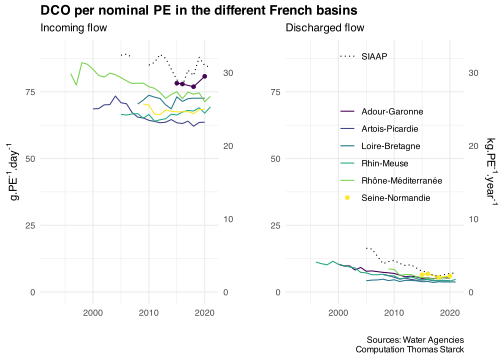
f_graph_capacity_basin(file_basin, "DCO_PE_ratio_in", "DCO_PE_ratio_out", "DCO", 0, 90, 0.6, 0.7)

Code
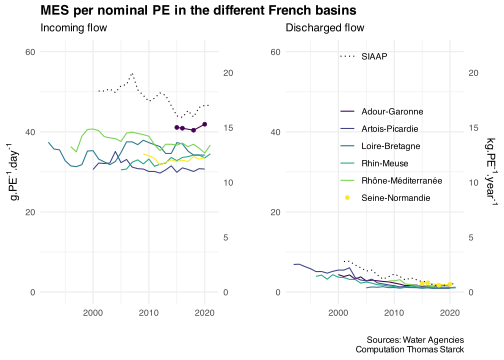
f_graph_capacity_basin(file_basin, "MES_PE_ratio_in", "MES_PE_ratio_out", "MES", 0, 60, 0.6, 0.7)

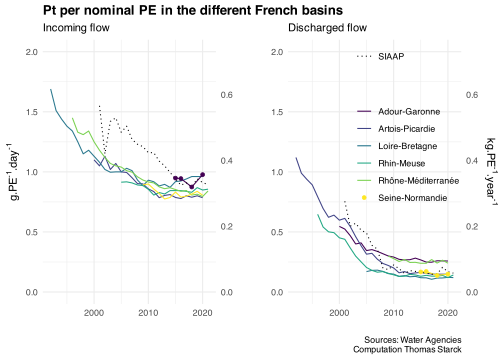
We do not analyse the very small WWTP (0 to 200 PE) which are very noisy and unreliable. Furthermore, they represent only a few percent of total flows.

Code
f_graph_capacity_basin_PE <- function(dataset, nutrient_ratio, ratio_label, y_min, y_max){
  g <- ggplot(dataset %>% filter(PE_bin !="unreported PE")) + 
    #basins and adapted legend
    geom_line(aes(Year, !!as.symbol(nutrient_ratio), color=basin)) +
    guides(
        color = 
          guide_legend(
            override.aes = 
              list(
                linetype = c(1, 1, 1, 1, 1, 0),
                shape = c(NA, NA, NA, NA, NA, 19)
                )
            ) 
      ) +
    #seine normandie point in 2015
    geom_point(
      data = dataset %>% filter(basin=="Seine-Normandie"), 
      aes(Year, !!as.symbol(nutrient_ratio), color = factor(basin))
      ) +
    #SIAAP dotted line
    geom_line(
      data = file_basin_PE_SIAAP, aes(Year, !!as.symbol(nutrient_ratio), linetype="SIAAP")
      ) +
    scale_linetype_manual(values=c("dotted")) +
    labs(
      x="", y=expression(paste("g.PE"^"-1", ".day"^"-1")), 
      color="",
      title = paste(ratio_label, "per nominal PE in the different French basins"),
      subtitle = "in the different French basins for each capacity category",
      caption = Source,
      linetype =""
    ) +
  facet_wrap(vars(PE_bin)) +
    scale_y_continuous(
        limits = c(y_min, y_max),
        sec.axis = 
          sec_axis(
            trans=~.*(365/1000), 
            name=expression(paste("kg.PE"^"-1", ".year"^"-1"))
            )
        )
  return(g)
}
Code
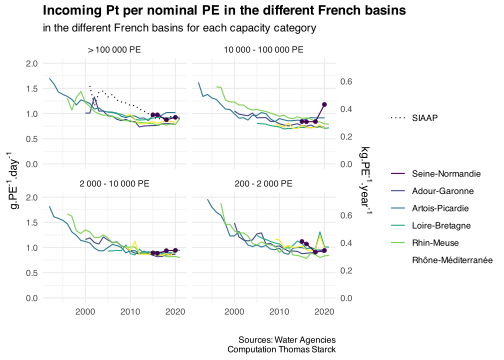
f_graph_capacity_basin_PE(file_basin_PE %>% filter(PE_bin !="0 - 200 PE"), "Pt_PE_ratio_in", "Incoming Pt", 0, 2) 

Code
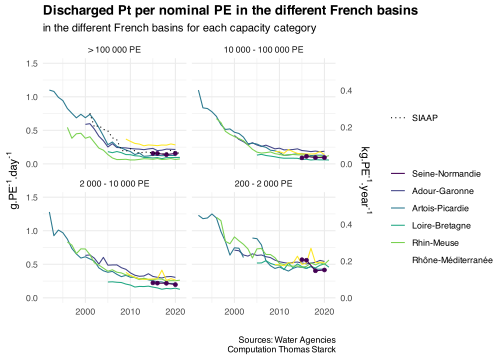
f_graph_capacity_basin_PE(file_basin_PE %>% filter(PE_bin !="0 - 200 PE"), "Pt_PE_ratio_out", "Discharged Pt", 0, 1.5)

Code
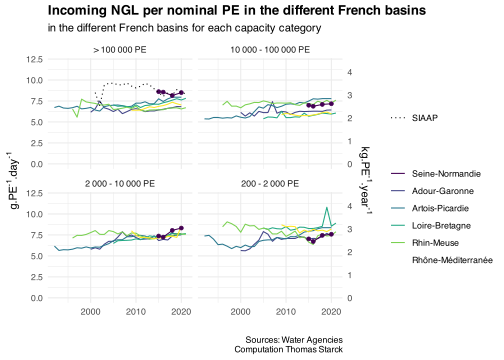
f_graph_capacity_basin_PE(file_basin_PE %>% filter(PE_bin !="0 - 200 PE"), "NGL_PE_ratio_in", "Incoming NGL", 0, 12)

Code
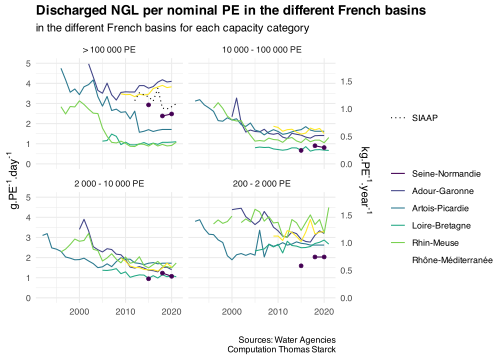
f_graph_capacity_basin_PE(file_basin_PE %>% filter(PE_bin !="0 - 200 PE"), "NGL_PE_ratio_out", "Discharged NGL", 0, 5)

Code
f_graph_capacity_basin_PE(file_basin_PE %>% filter(PE_bin !="0 - 200 PE"), "DBO5_PE_ratio_in", "Incoming DBO5", 0, 40)

Code
f_graph_capacity_basin_PE(file_basin_PE %>% filter(PE_bin !="0 - 200 PE"), "DBO5_PE_ratio_out", "Discharged DBO5", 0, 5)

Code
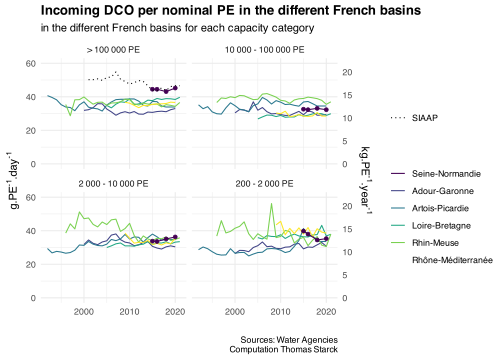
f_graph_capacity_basin_PE(file_basin_PE %>% filter(PE_bin !="0 - 200 PE"), "DCO_PE_ratio_in", "Incoming DCO", 0, 100)

Code
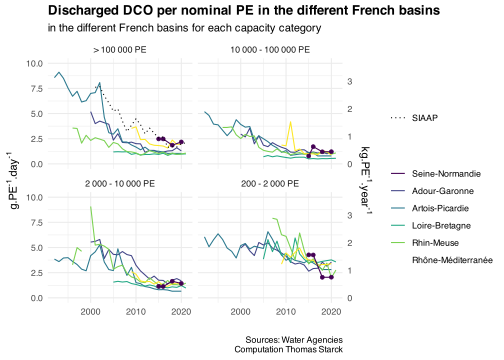
f_graph_capacity_basin_PE(file_basin_PE %>% filter(PE_bin !="0 - 200 PE"), "DCO_PE_ratio_out", "Discharged DCO", 0, 15)

Code
f_graph_capacity_basin_PE(file_basin_PE %>% filter(PE_bin !="0 - 200 PE"), "MES_PE_ratio_in", "Incoming DCO", 0, 60)

Code
f_graph_capacity_basin_PE(file_basin_PE %>% filter(PE_bin !="0 - 200 PE"), "MES_PE_ratio_out", "Discharged DCO", 0, 10)

Industrial network discharge

Code
path_source <- "output_data/industry_sewers_network_discharge/"
temp <- read_csv(paste0(path_source, "industry_sewers_network_discharge_GEREP_basins.csv"))
Code
Source <- "GEREP database\nComputation by Thomas Starck"

f_graph_industry_discharge <- function(dataset, nutrient_select, nutrient_label){
  g <- plot_grid(
    ggplot(temp %>% filter(basin != "Metropolitan France")) +
      geom_area(aes(Year, !!as.symbol(nutrient_select), fill = basin), alpha=.8) +
      geom_line(
        data = temp %>% filter(basin == "Metropolitan France"),
        aes(Year, !!as.symbol(nutrient_select))) +
      theme(legend.position = "none") +
      labs(
        x="", y="kt per year",
        fill = "",
        title = paste("Industrial", nutrient_label ,"pollution discharged in sewage network"),
        subtitle = "Metropolitan France",
        caption = "\n"
      ),
    ggplot(temp %>% filter(basin != "Metropolitan France")) +
      geom_area(aes(Year, !!as.symbol(nutrient_select), fill = basin), alpha=.8) +
      labs(
        x="", y="",
        fill = "",
        title = "",
        subtitle = "for each basin",
        caption = Source
      ) +
      theme(legend.position = "none") +
      facet_wrap(vars(basin), scales = "free_y"),
    rel_widths = c(0.25, 0.75)
    )
  
  return(g)
}
Code
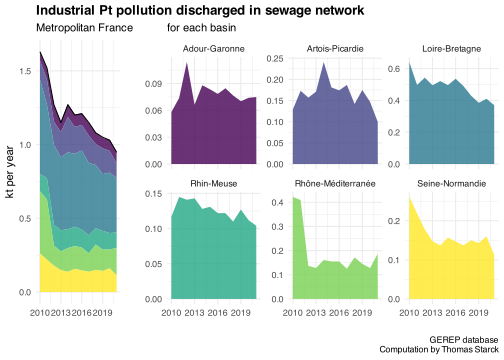
f_graph_industry_discharge(temp, "Pt_in", "Pt")

Code
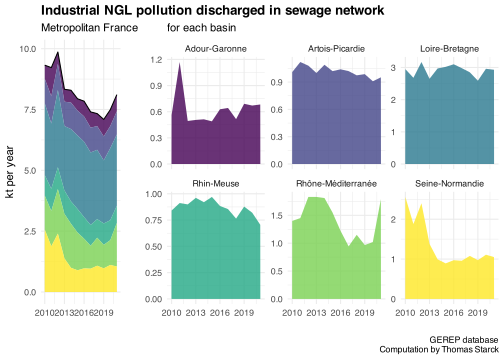
f_graph_industry_discharge(temp, "NGL_in", "NGL")

Code
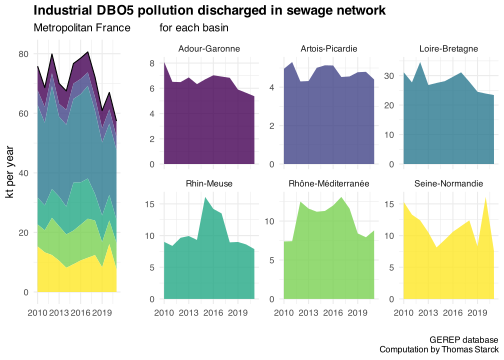
f_graph_industry_discharge(temp, "DBO5_in", "DBO5")

Code
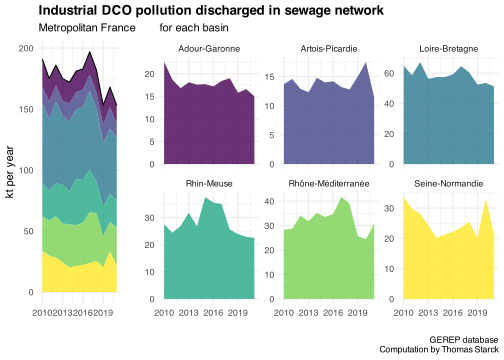
f_graph_industry_discharge(temp, "DCO_in", "DCO")

Code
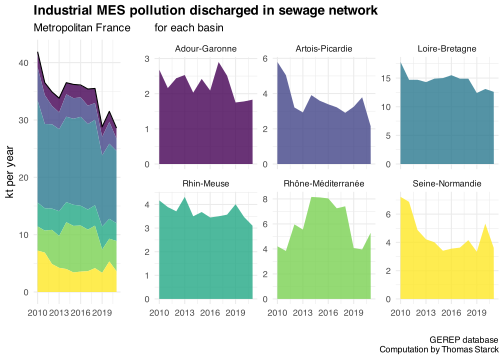
f_graph_industry_discharge(temp, "MES_in", "MES")

Capacities distribution

Code
path_source <- "output_data/zipf_law"
Source <- "Source: Water Agencies\nComputation by Thomas Starck"

file_zipf_law <- 
  list.files( 
    #read and merge csv of all years
    path = path_source,
    pattern = "zipf_law*", 
    full.names = T, 
    recursive = T
    ) %>% 
  lapply(read_csv) %>% 
  bind_rows
Code
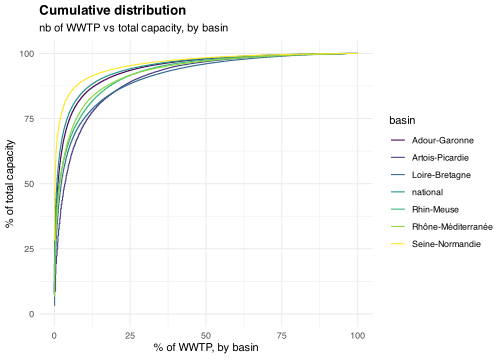
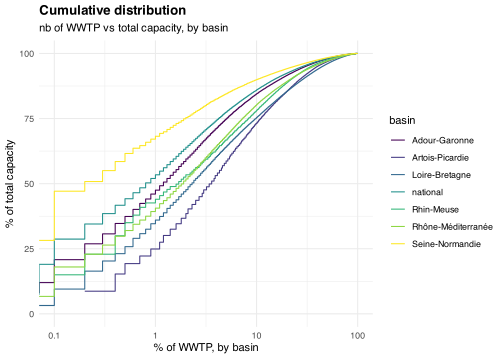
ggplot(file_zipf_law) +
  geom_step(
    aes(percent_rank, percent_cumulative_capacity, color = basin)
    ) +
  labs(
    x="% of WWTP, by basin", y="% of total capacity",
    title = "Cumulative distribution",
    subtitle = "nb of WWTP vs total capacity, by basin"
  ) +
  ylim(0, 100)

Code
ggplot(file_zipf_law) +
  geom_step(
    aes(percent_rank, percent_cumulative_capacity, color = basin)
    ) +
  scale_x_log10(labels = scales::label_number(drop0trailing = TRUE)) +
  scale_y_log10(labels = scales::label_number(drop0trailing = TRUE)) +
  labs(
    x="% of WWTP, by basin", y="% of total capacity",
    title = "Cumulative distribution",
    subtitle = "nb of WWTP vs total capacity, by basin"
  ) +
  ylim(0, 100)

Code
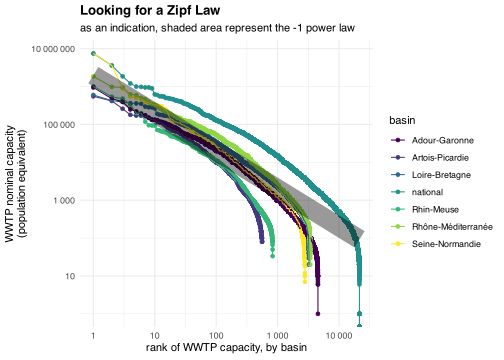
ggplot(file_zipf_law) +
  geom_point(
    aes(rank_STEU, capacity, color = basin)
    ) +
  geom_line(
    aes(rank_STEU, capacity, color = basin)
    ) +
  scale_x_log10(labels = scales::label_number(drop0trailing = TRUE)) +
  scale_y_log10(labels = scales::label_number(drop0trailing = TRUE)) +
  labs(
    x="rank of WWTP capacity, by basin", y="WWTP nominal capacity\n(population equivalent)",
    title = "Looking for a Zipf Law",
    subtitle = "as an indication, shaded area represent the -1 power law"
  ) +
  geom_function(fun = ~ (2*10^6)*.x^-(1), linewidth=9, alpha=.4)

Save final data

We save the adjusted nutrient flows for each basin, averaged over the 2015-2020 period.
Code
#basin mean over 2015-2020
temp <- file_basin %>%
  filter(Year>2014 & Year<2021) %>%
  mutate(Year = "2015-2020 mean") %>%
  select(
    basin, Year,
    Pt_in_adj, Pt_out_adj,
    NGL_in_adj, NGL_out_adj,
    DBO5_in_adj, DBO5_out_adj,
    DCO_in_adj, DCO_out_adj,
    MES_in_adj, MES_out_adj
  ) %>%
  group_by(Year, basin) %>%
  summarise_all(mean, na.rm=T) %>%
  mutate_if(
    is.numeric, signif, 2
    )

#metropolitan mean over 2015-2020
temp2 <- temp %>%
  mutate(basin = "Metropolitan France") %>%
  group_by(Year, basin) %>%
  summarise_all(sum) 

#save all data
temp <- bind_rows(
  temp2, temp
)
path_output <- "output_data/0_final_data/"
f_save_csv_files(
  temp,
  path_output,
  "basins_flows_2015_2020.csv"
)
Code
rm(list = ls())